All You Need to Know About the Caves Near Gatlinburg
From massive commercial caverns to hidden wild caves, Tennessee's underground world offers adventures for every explorer. Here's your complete guide to caves near Gatlinburg—including which ones you can visit, what to expect, and insider tips for an unforgettable subterranean experience.
Tennessee holds a secret beneath its mountains: more caves than any other state in America. Over 10,000 known caves honeycomb the limestone beneath the Smokies, creating an underground world as spectacular as the forests and peaks above ground.
Most visitors to Gatlinburg never venture below the surface. They hike to waterfalls, drive scenic mountain roads, and explore the national park—all wonderful experiences. But they miss the otherworldly beauty of cave formations millions of years in the making, underground rivers flowing through darkness, and geological wonders that make you feel like you've stepped onto another planet.
After managing cabins in Gatlinburg and talking with thousands of guests, I've learned that cave tours rank among the most memorable activities—especially for families with kids who think caves are the coolest thing ever, and adults amazed by formations they never knew existed.
This guide covers everything you need to know about caves near Gatlinburg: which ones offer tours, what you'll see, pricing and logistics, kid-friendliness ratings, and insider tips for making the most of your underground adventure.
Understanding Tennessee's Cave Abundance
Why Tennessee Has So Many Caves
Tennessee's unique geology creates perfect cave-forming conditions. The state sits on limestone bedrock formed from ancient seas 350-450 million years ago. Over millions of years, slightly acidic rainwater seeping through cracks dissolved the limestone, creating passages, chambers, and the spectacular formations that make caves beautiful.
The Great Smoky Mountains region particularly favors cave development. Abundant rainfall, temperature variations, and complex geology created thousands of caves ranging from small rock shelters to massive multi-mile systems.
Public vs. Closed Caves
Of Tennessee's 10,000+ caves, only a handful are open to the public. Most remain closed for several critical reasons:
Wildlife Protection: Many caves house endangered bat populations, including federally protected species. White-nose syndrome, a fungal disease devastating bat colonies nationwide, makes protecting these habitats essential. Humans entering caves can spread the disease, so restricted access protects these important ecosystems.
Safety Concerns: Wild caves present serious dangers: vertical drops, unstable rock, hypothermia from cold water, disorientation in complete darkness, and toxic air in some chambers. Without proper equipment, training, and experience, entering wild caves is genuinely life-threatening.
Preservation: Cave formations grow incredibly slowly—some stalactites add only a cubic inch per century. Human touch leaves oils that prevent further formation growth and discolor surfaces. Heavy visitation damages fragile formations irreversibly.
Historical/Archaeological Significance: Some caves contain Native American artifacts, paleontological remains, or historical features requiring protection from looting or disturbance.
The caves detailed in this guide balance public access with preservation through professionally managed tours that protect both visitors and the underground environment.
Commercial Caves Near Gatlinburg: Tours You Can Take
1. Tuckaleechee Caverns: "The Greatest Site Under the Smokies"
Location: Townsend, TN (25 minutes from Gatlinburg)
Distance from Timberidge Cabins: 30 minutes
Tour Length: 1 hour (1-mile guided walk)
Difficulty: Moderate (includes 200+ steps each direction)
Kid-Friendly Rating: ★★★★★ (Ages 5+)
What Makes It Special:
Tuckaleechee Caverns earned AAA's rare five-star "Gem Attraction" rating—the highest-rated cave in the eastern United States. This family-owned attraction has operated since 1953, growing from 2,000 visitors its first year to over 50,000 annually. The reason becomes obvious the moment you descend into the caverns.
The scale is breathtaking. The Big Room—largest cave chamber open to the public in the eastern U.S.—extends longer and wider than a football field with ceilings soaring nearly 150 feet overhead. Massive stalagmites reach 24+ feet tall. Flowstone formations stretch hundreds of feet in lengths and widths.
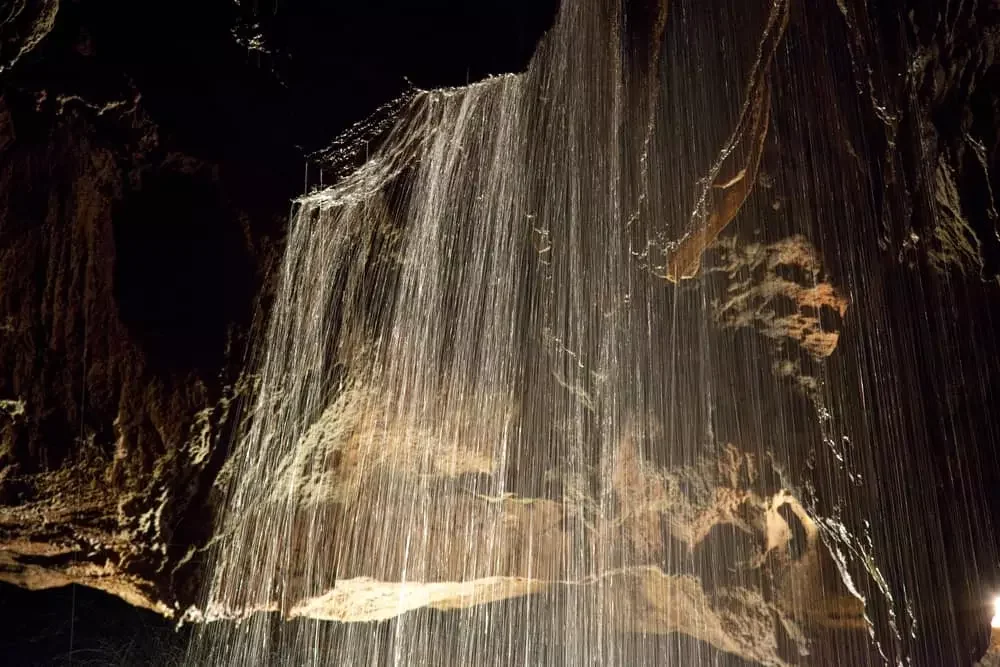
But the tour's crown jewel is Silver Falls: a 210-foot, two-tier underground waterfall—the tallest subterranean waterfall in the eastern United States. Water cascades from upper chambers, creating mist and sound that fill the cavern. The water is so pure that visitors often bring bottles to take some home.
Tour Details:
Guides lead groups on lighted pathways through chambers filled with stalactites, stalagmites, columns, flowstone, and cave coral. The formations display incredible variety: delicate soda straws hanging like glass tubes, massive draperies looking like frozen stone curtains, helictites defying gravity as they twist in impossible directions.
The caverns maintain a constant 58°F year-round—refreshingly cool in summer, surprisingly warm compared to winter surface temperatures. The temperature consistency creates a unique microclimate where rare cave-dwelling creatures thrive.
One fascinating feature: the caverns house one of the world's most sensitive seismographs. This scientific instrument can detect earthquakes from anywhere on Earth—including underground nuclear tests from North Korea. Visitors can view the equipment and learn how this hidden chamber helps scientists monitor global seismic activity.
Practical Information:
Season: Open March 1 - November 30 (Closed December-February)
Hours:
March & November: 10am-5pm
April-October: 10am-6pm
Admission (2026 prices):
Adults (13+): $24
Children (5-12): $12
Children 4 and under: FREE
Cash and credit cards accepted
Important Notes:
Tours depart regularly throughout the day; no reservations needed
Allow 1.5 hours total (tour + gift shop browsing)
Wear comfortable walking shoes with good traction
Bring a light jacket (58°F underground)
Over 200 steps descending and ascending—not suitable for those with mobility issues
No pets allowed
Photography permitted (no flash recommended for best results)
Getting There from Gatlinburg: Take Highway 321 South through Gatlinburg toward Townsend. Follow signs to Tuckaleechee Caverns. The drive is scenic, following the Little Pigeon River through beautiful mountain landscapes.
Insider Tips:
Visit on weekdays to avoid weekend crowds
Morning tours (10-11am) tend to be less crowded
The gift shop sells authentic cave minerals and unique souvenirs
Combine with a Cades Cove visit—they're in the same direction
Pack lunch and picnic in Townsend's Quiet Side parks
Best For: Families with elementary-age and older children, anyone wanting the most spectacular cave experience near Gatlinburg, geology enthusiasts, photographers, groups seeking air-conditioned summer activity
2. Forbidden Caverns: History, Mystery, and Natural Beauty
Location: Sevierville, TN (20 minutes from Gatlinburg)
Distance from Timberidge Cabins: 25 minutes
Tour Length: 1 hour
Difficulty: Moderate
Kid-Friendly Rating: ★★★★☆ (Ages 5+)
What Makes It Special:
Forbidden Caverns combines natural geological wonder with fascinating human history spanning thousands of years. The caverns' name comes from a Cherokee legend about a princess who became lost forever in the "forbidden hollow mountain of the two streams"—a story that adds romantic mystery to the scientific reality.
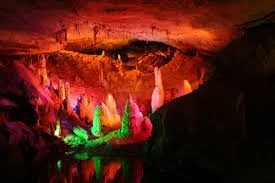
The formations here are remarkably diverse: towering natural chimneys reaching toward invisible ceilings, numerous grottos creating intimate chambers within larger passages, and crystal-clear underground streams that reflect formations like natural mirrors.
But what truly distinguishes Forbidden Caverns is its documented human use. Eastern Woodland Indians sheltered here during harsh winters starting thousands of years ago. Archaeological excavations in larger chambers uncovered Native American artifacts now preserved at the University of Tennessee. Walking through these passages, you're literally following footsteps from prehistory.
The Moonshine Connection:
From the early 1920s through 1943, Forbidden Caverns served a less legal purpose: moonshine production. Bootleggers chose these caverns for compelling reasons: complete concealment, stable temperatures perfect for fermentation, and most importantly, an underground river providing 98% pure water essential for quality moonshine.
Federal authorities finally discovered the operation in 1943 and destroyed the still. However, extracting the massive copper equipment from deep underground proved so difficult that metal pieces remain visible during tours—tangible connections to Prohibition-era Appalachian culture.
Tour Details:
Knowledgeable, enthusiastic guides lead groups through the caverns, explaining formation geology, pointing out rare features, and sharing the caverns' colorful history. The tour balances education with entertainment, making it engaging for both adults and children.
The lighting enhances natural formations without overwhelming them. Unlike some commercial caves that use garish colored lights, Forbidden Caverns employs subtle illumination that highlights formations' natural beauty while maintaining the cave's mysterious atmosphere.
Practical Information:
Season: Seasonal operation (typically March-November; check before visiting)
Hours: Vary by season; generally 10am-5pm or 10am-6pm
Admission (2026 prices):
Adults (13+): $25
Children (5-12): $15
Children 4 and under: FREE
Important Notes:
No online ticket sales currently; purchase at entrance
Not accepting buses or large organized groups (2026)
Free parking on-site
Tours depart regularly; no reservations required
Photography allowed
Gift shop and refreshment stand available
Picnic area on grounds
Getting There from Gatlinburg: Take Highway 441 North toward Sevierville. Follow signs to Forbidden Caverns on Blowing Cave Road. The route is straightforward and well-marked.
Insider Tips:
Arrive early in the day during peak season
Guides love sharing additional stories if you ask questions
The gift shop sells interesting geological specimens and books
Combine with nearby Sevierville attractions for a full day
Bring cash (they accept cards but sometimes have processing issues)
Best For: History buffs interested in Native American and Prohibition-era stories, families wanting educational entertainment, anyone seeking a cave experience with cultural significance beyond pure geology
National Park "Caves" and Cave-Like Features
3. Alum Cave Bluff: Not a Cave, But Worth the Hike
Location: Great Smoky Mountains National Park
Distance from Timberidge Cabins: 15 minutes to trailhead
Hike Length: 4.4 miles roundtrip (to bluffs only)
Elevation Gain: 1,400 feet
Difficulty: Moderate
Kid-Friendly Rating: ★★★☆☆ (Ages 8+, fit)
What Makes It Special:
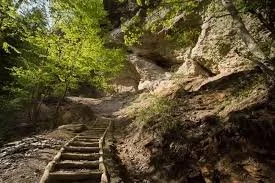
Despite "cave" in its name, Alum Cave is actually a massive concave bluff—an 80-foot-high, 500-foot-long rock overhang creating shelter resembling an above-ground cave. While not technically a cave, standing beneath the bluff creates the impression of being inside one: rock extends overhead, sound echoes differently, temperature drops noticeably, and the sense of enclosure is complete.
The trail to reach Alum Cave ranks among the Smokies' most popular and spectacular hikes. The 2.2-mile climb passes through old-growth forest, crosses log bridges over rushing streams, threads through Arch Rock (a natural tunnel with stone stairs and cables), and reaches Inspiration Point where mountain views open dramatically.
At the bluffs themselves, you can rest in the natural shelter while admiring the formations and views. During warm months, water drips constantly from the overhang. In winter, those drips freeze into elaborate icicle formations creating fairytale-like ice sculptures.
Geological Significance:
Alum Cave Bluff contains some of the world's rarest minerals. The rock face shows distinctive coloration from mineral deposits, and geologists have identified unique compounds found nowhere else. The "alum" in the name comes from early settlers who mistakenly thought the white powder on rocks was alum (it's actually Epsom salt).
Practical Information:
Access: Year-round (though trail can be icy/dangerous in winter)
Trailhead: Alum Cave parking area, Newfound Gap Road
Cost: FREE (Great Smoky Mountains National Park charges no entrance fee)
Parking: $5 day-use pass required at most GSMNP trailheads
Trail Details:
Well-maintained path, some steep sections
Cables installed for assistance on steepest parts
Suitable for fit children 8+ with hiking experience
Allow 2.5-3.5 hours roundtrip
Highly popular; parking lot fills by 9am in peak season
Insider Tips:
Arrive before 8:30am or use park shuttle during peak season
The trail continues 2.8 miles past bluffs to Mount LeConte summit (strenuous; 10.4 miles roundtrip total)
Pack extra layers—temperature drops significantly at the bluffs
Rain makes rocks slippery; cables become essential
Winter ice creates hazardous conditions; experience and equipment required
Best For: Hikers wanting "cave-like" experience combined with spectacular mountain scenery, families with older kids who enjoy moderate challenges, anyone visiting Great Smoky Mountains National Park who wants a signature experience
Other GSMNP Cave Features
Gregory's Cave (Cades Cove): The largest cave in the Great Smoky Mountains National Park, Gregory's Cave features an entrance measuring 10 feet wide by 4 feet tall. It opened to public tours in 1925 but closed later for preservation and safety. During the Cold War, it was developed as a potential fallout shelter. Today, it remains closed to protect the cave environment and ensure visitor safety.
Bull Cave: Located near the Ace Gap Trail on the park's outskirts, Bull Cave is Tennessee's deepest cave at nearly 1,000 feet. It is not accessible to the public and extremely dangerous. The National Park Service maintains strict closure for safety reasons.
Whiteoak Sink & Blowhole Cave: Accessible via a short hike, Whiteoak Sink is a limestone depression containing several small caves. The caves house protected bat populations, making them off-limits to visitors. However, you can view the sink area and observe the geological features from designated overlooks. Signs clearly mark restricted areas.
Important: Never enter closed caves in the national park. It's illegal, dangerous, and threatens fragile ecosystems. Enjoy these features from observation points and respect closure signs.
Beyond Gatlinburg: Exceptional Caves Worth the Drive
Ruby Falls (Chattanooga, TN)
Distance from Gatlinburg: 2 hours
Tour Length: 1-1.5 hours
Admission: $30-35 adults, ~$20 children
Discovered in 1928, Ruby Falls features a stunning 145-foot underground waterfall inside Lookout Mountain—the tallest and deepest underground cave waterfall open to the public in the United States. The tour leads through narrow passages opening into chambers where the falls cascade into a sparkling pool, illuminated with colorful lights creating magical ambiance.
Worth the Drive If: You're spending 5+ days in the area and want the most spectacular underground waterfall, you're visiting Chattanooga anyway, or you're a serious cave enthusiast wanting to see multiple exceptional caverns.
The Lost Sea (Sweetwater, TN)
Distance from Gatlinburg: 1.5 hours
Tour Length: 1.25 hours
Admission: ~$30 adults, ~$18 children
America's largest underground lake, The Lost Sea stretches 4.5 acres (with unknown additional passages). Tours include a glass-bottom boat ride across the crystalline water while guides explain the lake's discovery and the fascinating cave-dwelling fish living in complete darkness.
Worth the Drive If: You want a unique boat-ride cave experience, you're fascinated by underground ecosystems, or you're making a loop through eastern Tennessee visiting multiple attractions.
Cumberland Caverns (McMinnville, TN)
Distance from Gatlinburg: 2.5 hours
Admission: Varies by tour type
One of Tennessee's largest show caves, Cumberland Caverns offers multiple tour options from standard 1.5-hour walking tours to adventure tours requiring crawling and climbing. The caverns host underground concerts in a massive chamber with natural acoustics, and overnight cave camping experiences.
Worth the Drive If: You're seeking adventurous caving beyond standard tours, you want to attend an underground concert, or you're interested in overnight cave experiences.
Planning Your Cave Adventure: Practical Guide
What to Wear and Bring
Clothing:
Layers: Cave temperatures stay constant 55-60°F year-round. Cool in summer, relatively warm compared to winter surface temps. Bring a light jacket regardless of surface weather.
Long pants: Protects legs from rock edges, dripping water, and temperature changes.
Closed-toe shoes with good traction: ESSENTIAL. Wet cave surfaces can be slippery. No sandals, flip-flops, or smooth-soled shoes.
Avoid white or light-colored clothing: Cave dirt and mineral residue can stain. Dark clothes hide inevitable smudges better.
What to Bring:
Water bottle (tours involve walking; stay hydrated)
Small backpack or bag for personal items
Camera (check flash policy—some caves restrict it)
Cash for souvenirs and refreshments
Light jacket or sweater
Towel in car (you might be slightly damp exiting)
What NOT to Bring:
Large bags (cumbersome in narrow passages)
Pets (not allowed in commercial caves)
Food/drinks (not permitted underground)
Expensive clothing you're worried about getting dirty
Physical Requirements and Accessibility
Tuckaleechee Caverns: Requires navigating 200+ stairs descending into the caverns, then 200+ climbing back out. This is genuinely challenging for people with:
Heart or lung conditions
Knee or hip problems
Poor balance
Claustrophobia (some passages feel tight)
Extreme fear of darkness
Not wheelchair accessible. Not suitable for very young children who tire easily or elderly adults with mobility limitations.
Forbidden Caverns: Similar requirements to Tuckaleechee but slightly less strenuous stair climbing. Still requires reasonable fitness and mobility.
Alum Cave Bluff: A moderate hike, not a cave tour. Requires hiking fitness, good balance, and comfort with some exposure (cables protect steep sections). Much more physically demanding than commercial cave tours.
General Guidance: If you can comfortably climb three flights of stairs, walk a mile, and handle mild temperature changes, commercial cave tours should be manageable. When in doubt, call ahead and describe any concerns—tour operators provide honest assessments of whether their cave suits your abilities.
Age Recommendations
Toddlers (Under 5): FREE at both major commercial caves, but consider carefully whether they'll enjoy it. Toddlers often find caves:
Too dark (scary)
Too cold (uncomfortable)
Too long (attention span issues)
Too echoey (unsettling sounds)
Some 4-year-olds love caves; others have meltdowns. You know your child best.
Young Children (5-8): The ideal age for first cave experiences. Old enough to be amazed without being frightened, young enough that everything seems magical. Both Tuckaleechee and Forbidden Caverns work well for this age group.
Tweens/Teens (9-17): Typically love caves. The combination of geology, history, and "coolness factor" engages even reluctant participants. The physical challenge appeals to energy that needs burning.
Adults: Cave tours fascinate adults who appreciate geological time scales, formation processes, and historical significance. Many adults report caves as highlights of their Gatlinburg trips.
Seniors: Physical ability matters more than age. Active seniors who regularly walk and have no significant health limitations often enjoy cave tours. Less mobile seniors should consider the 200+ steps carefully.
Combining Caves with Other Activities
Half-Day Cave Trip:
Morning: Cave tour (1-1.5 hours including drive time)
Lunch: Restaurant near cave or return to cabin
Afternoon: Different activity (downtown shopping, scenic drive, etc.)
Full-Day Cave + Nature:
Morning: Tuckaleechee Caverns tour
Lunch: Picnic in Townsend
Afternoon: Cades Cove Loop (both are near Townsend)
Evening: Return to cabin for hot tub and dinner
Rainy Day Option: Caves make perfect rainy-day activities. Underground, you're sheltered from weather. The constant 58°F temperature feels comfortable when surface weather is miserable. Plan caves as backup options when forecasts look questionable.
Cave Formation 101: Understanding What You're Seeing
How Caves Form
The Basic Process:
Acidic water: Rainwater absorbs carbon dioxide from air and soil, creating weak carbonic acid
Dissolution: Acid seeps through limestone cracks, slowly dissolving rock
Passage creation: Over millions of years, dissolved rock creates passages and chambers
Water table changes: As water tables drop, air-filled caves remain
The Smoky Mountain caves formed 20-30 million years ago when this region had different water tables and climate conditions than today.
Common Cave Formations (What You'll See)
Stalactites: Formations hanging from ceilings like stone icicles. Water dripping from above deposits minerals that build downward. Remember: Stalactites hang tight to the ceiling.
Stalagmites: Formations growing upward from floors where dripping water deposits minerals. Stalagmites might reach the ceiling. Some in Tuckaleechee exceed 24 feet tall.
Columns: Where stalactites and stalagmites meet, creating floor-to-ceiling pillars. These massive features can be several feet in diameter and represent millions of years of growth.
Flowstone: Sheet-like formations created by water flowing over cave surfaces, depositing thin mineral layers that build up over time. Some flowstone in Tuckaleechee extends hundreds of feet.
Soda Straws: Delicate, hollow stalactites resembling thin glass tubes. Water flows through the center, depositing minerals only at the edges. Extremely fragile—human touch destroys them.
Helictites: Bizarre formations that defy gravity, twisting in seemingly impossible directions. Scientists still debate exactly how they form. Rare and fascinating.
Cave Coral: Bumpy, coral-like formations on walls and ceilings. Created by seeping water depositing minerals in irregular patterns.
Draperies (Cave Bacon): Thin, rippling formations hanging from ceilings like stone curtains. Often show color banding from different mineral compositions, resembling bacon strips.
Growth Rates
Cave formations grow incredibly slowly. Most stalactites add only one cubic inch every 100-200 years. The massive columns in Tuckaleechee took millions of years to form. This is why touching formations is strictly prohibited—oils from human hands prevent further growth and discolor surfaces permanently.
Cave Photography Tips
Equipment and Settings
Camera Type: Modern smartphones work surprisingly well in commercial caves thanks to improved low-light capabilities. DSLR or mirrorless cameras with manual controls offer more flexibility but aren't necessary for good photos.
Settings (if using manual camera):
High ISO (1600-3200) to capture available light
Wide aperture (f/2.8-f/4) to maximize light collection
Slower shutter speed (1/30 to 1/60 second) balanced against hand-shake risk
Consider bringing small tripod or monopod for sharper shots
Flash Considerations: Many caves discourage flash photography because:
Disrupts other tour participants
Can damage guides' night vision
Often creates harsh, unflattering light
Modern caves have lighting designed for no-flash photography
If flash is permitted and you choose to use it, diffuse it with paper tissue to soften the light.
Composition Tips
Formations as Subjects:
Get close to show detail and texture
Include scale (distant people show formation size)
Look for color variations and unique shapes
Capture both grand chambers and intimate details
Using Available Light:
Commercial cave lighting often creates dramatic effects
Position yourself where lights enhance formations
Use shadows to create depth and mystery
Silhouette people against lit formations
Unique Angles:
Shoot upward toward ceiling formations
Capture reflections in underground streams and pools
Frame passages leading into darkness
Show the contrast between lit and shadowed areas
Etiquette
Never use flash in prohibited areas
Don't delay tour groups for photography
Step aside to let others pass while you shoot
Ask permission before photographing other tour members
Share exceptional shots with the cave—they love user-generated content
Safety and Conservation
Safety Guidelines
Follow Guide Instructions: Guides know the caves intimately and understand the hazards. Follow their directions exactly, stay with the group, and don't wander off-trail.
Watch Your Head: Low ceilings and formations create head-knock hazards. Pay attention, duck when necessary, and watch children carefully.
Stay on Designated Paths: Paths are lighted and maintained. Stepping off-trail risks injury from uneven surfaces, sharp rocks, or unseen drop-offs.
Medical Considerations: Notify guides if you have claustrophobia, heart conditions, respiratory issues, or other medical concerns that might be affected by cave environments.
Emergency Preparedness: Commercial caves have emergency procedures and trained staff. If you feel unwell, notify your guide immediately. Don't try to "tough it out."
Conservation Ethics
Don't Touch Formations: Oils from human skin prevent further formation growth and cause permanent discoloration. Guides emphasize this repeatedly because it's critical to cave preservation.
No Littering: Obvious but worth stating: carry out everything you bring in. Even organic material (food scraps, orange peels) doesn't belong in cave ecosystems.
Respect Wildlife: Cave-dwelling creatures adapted to total darkness over millions of years. They're extremely sensitive to disturbance. Never touch, chase, or harass any animals you encounter.
White-Nose Syndrome Awareness: This fungal disease has devastated North American bat populations. If you've visited other caves (especially in the Northeast where WNS is prevalent), inform cave staff. Some operations require clothing/shoe decontamination to prevent disease spread.
Frequently Asked Questions
Q: Are caves safe for people with claustrophobia? A: Commercial caves are spacious enough that most people with mild claustrophobia manage fine. The Big Room at Tuckaleechee is enormous—definitely not confining. However, some passages are tighter. If you have severe claustrophobia, caves might not be enjoyable. Consider visiting during off-peak hours when tours are smaller and you have more personal space.
Q: Will I see bats? A: Possibly, but not commonly on commercial tours. Most cave-dwelling bats avoid human activity areas. The caves closed to the public have larger bat populations. If you do see bats, consider yourself lucky—and don't disturb them.
Q: Can I get sick from cave air? A: Cave air quality in commercial caves is generally excellent. The constant airflow and lack of pollutants make it cleaner than city air. However, caves can aggravate respiratory conditions due to humidity. People with asthma should bring inhalers.
Q: What if I need to use the bathroom during the tour? A: Use facilities before entering. Tours last about an hour, and there are no underground bathrooms. Commercial caves have restrooms at visitor centers before you descend.
Q: Are caves wheelchair accessible? A: Unfortunately, no. The stairs, uneven surfaces, and narrow passages make wheelchair access impossible in Tuckaleechee and Forbidden Caverns. This is inherent to cave geology, not lack of accommodation effort.
Q: Can I bring my service dog? A: Legitimate service animals may be permitted with advance notice. Call ahead to discuss specific needs. Emotional support animals typically aren't allowed due to environmental concerns.
Q: How cold is it really? A: Caves maintain 55-60°F year-round. In summer (when surface temps hit 85-90°F), caves feel refreshingly cool. In winter (when surface temps drop to 30-40°F), caves feel relatively warm. Bring a light jacket in summer, skip heavy coats in winter.
Q: Will I get dirty? A: Slightly. Cave surfaces and dripping water might leave minor smudges on clothing. Wear dark colors and clothes you don't mind getting a bit dusty.
Why Stay at Timberidge Cabins for Your Cave Adventures
Strategic Positioning
Timberidge Cabins offer ideal location for cave exploration:
25-30 minutes to both Tuckaleechee Caverns and Forbidden Caverns
15 minutes to Alum Cave Bluff trailhead
Central to all Gatlinburg/Sevierville attractions
Easy to create full-day itineraries combining caves with other activities
Post-Cave Recovery
After descending hundreds of stairs, walking a mile underground, and climbing back to daylight, you'll appreciate returning to:
Hot tubs: Soothe muscles worked during cave exploration
Fireplaces: Warm up if the 58°F cave temperature left you chilled
Full kitchens: Prepare easy lunch or snacks without restaurant stops
Game rooms: Kids burn remaining energy without parents' involvement
Decks with views: Relax while recounting underground discoveries
Multi-Day Cave Exploration
For serious cave enthusiasts, Timberidge's location enables ambitious itineraries:
Day 1: Tuckaleechee Caverns + Cades Cove
Day 2: Alum Cave Bluff hike in Great Smoky Mountains
Day 3: Forbidden Caverns + Sevierville attractions
Day 4: Day trip to Ruby Falls or Lost Sea
Having a consistent cabin basecamp eliminates the hassle of changing accommodations while maximizing exploration time.
Planning Your Cave Vacation
Sample Itineraries
Family with Elementary-Age Kids (3 Days):
Day 1: Arrive, settle into cabin, explore Gatlinburg downtown
Day 2: Morning Tuckaleechee Caverns tour, afternoon Cades Cove wildlife viewing
Day 3: Easy morning activities, depart after lunch
Couples' Long Weekend (4 Days):
Day 1: Arrive, romantic dinner in Gatlinburg
Day 2: Alum Cave Bluff hike (morning), downtown exploration (afternoon)
Day 3: Forbidden Caverns (morning), Arts and Crafts Community (afternoon)
Day 4: Tuckaleechee Caverns, lunch in Townsend, depart
Extended Family Reunion (Week):
Mix cave tours with other activities
Split up for different fitness-level adventures
Those not interested in caves have numerous alternatives
Reconvene at cabin evenings for shared meals and stories
When to Visit
Best Months for Cave Tours: Spring (April-May): Pleasant surface weather, caves open, moderate crowds
Fall (September-October): Beautiful foliage, comfortable temperatures, caves still open
Summer (June-August): Caves provide air-conditioned relief from heat, longest hours
Winter: Caves closed December-February; plan for March reopening
Avoiding Crowds:
Weekdays over weekends (dramatically fewer visitors)
Morning tours (10-11am) before afternoon tour groups arrive
Shoulder seasons (April-May, September) vs. peak summer
November before caves close (cold surface weather keeps visitors away)
Beyond Caves: Complementary Gatlinburg Activities
Cave tours typically take half a day including drive time. Fill the rest of your vacation with:
Nature Activities:
Great Smoky Mountains hiking
Scenic drives (Cades Cove, Roaring Fork, Newfound Gap Road)
Waterfall viewing
Wildlife watching
Family Attractions:
Ripley's Aquarium of the Smokies
Anakeesta mountaintop park
Gatlinburg SkyPark and SkyBridge
Ober Gatlinburg
Relaxation:
Cabin hot tub and fireplace time
Downtown shopping and dining
Arts and Crafts Community exploration
Simply enjoying mountain views from your deck
The Underground World Awaits
Tennessee's caves represent millions of years of geological processes creating beauty impossible to experience anywhere else. Standing beneath 150-foot ceilings decorated with formations older than human civilization, watching underground waterfalls cascade through chambers that have never seen sunlight, walking passages where Native Americans sought shelter millennia ago—these experiences connect you to deep time and natural wonder in ways surface attractions cannot.
Most Gatlinburg visitors never venture underground. They miss something genuinely special. Don't make that mistake.
Choose your cave—whether the massive spectacle of Tuckaleechee, the historical richness of Forbidden Caverns, or the hiking challenge of Alum Cave Bluff. Plan your visit, bring a light jacket, and prepare to be amazed by what lies beneath the mountains you've been admiring from above.
The caves have been forming for 30 million years. They'll wait
